
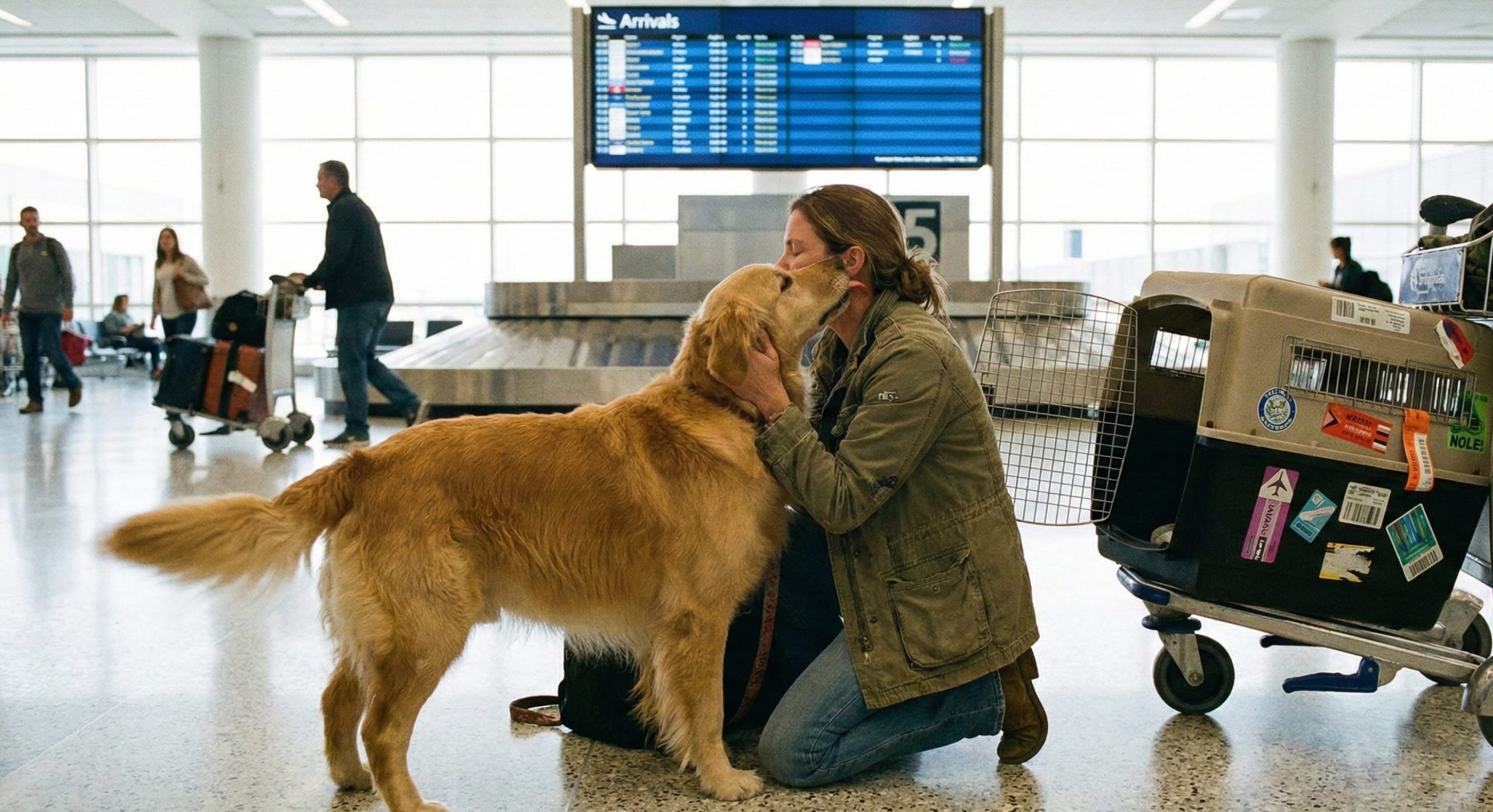
With airlines offering different pet transport options, the decision between flying cargo vs excess baggage can feel overwhelming. After all, your pet’s safety and comfort are paramount, and making the wrong choice could turn travel day into a nightmare.
The good news is that millions of pets travel safely by air each year. However, understanding the nuances between cargo and excess baggage options can make all the difference in ensuring your furry friend has the smoothest possible journey.
Whether you’re travelling with a nervous rescue cat or an adventurous golden retriever, this guide will help you navigate the complexities of pet air travel and make an informed decision.
The differences between cargo and excess baggage
When airlines refer to pets as “excess baggage,” they’re typically describing animals that travel in the pressurised cargo hold but are processed through the passenger baggage system. This option is usually available for pets weighing under 32kg (including carrier) and travelling on the same flight as their owners.
Cargo shipping, on the other hand, involves your pet travelling as freight, often on different flights or even different days. Cargo pets are handled through freight terminals, which can mean longer processing times and different environmental controls, but also more robust tracking systems.
The excess baggage route typically offers several advantages:
- Your pet travels on your exact flight
- Faster processing times at both departure and arrival
- Generally lower costs than cargo shipping
- You maintain closer proximity to your pet throughout the journey
But cargo shipping isn’t without its benefits. Airlines often provide more detailed tracking, specialised handling procedures, and can accommodate larger pets or multiple animals more easily.
The decision between flying cargo vs excess baggage often comes down to your pet’s size, the airline’s policies, and your specific travel requirements.
Safety considerations
Both transport methods utilise the same pressurised, temperature-controlled cargo holds, but the handling processes differ significantly. Excess baggage pets typically experience shorter ground times, reducing stress and exposure to extreme temperatures during loading.
Key safety factors to consider include:
- Temperature control: Both options use climate-controlled environments, but excess baggage often means less time exposed to ground-level temperature variations
- Handling frequency: Excess baggage typically involves fewer transfers between vehicles and storage areas
- Flight timing: Excess baggage ensures your pet travels when you do, avoiding potential delays or rescheduling
- Monitoring capabilities: While cargo offers more detailed tracking, excess baggage allows you to be present for check-in and collection
Data suggests that pets travelling as excess baggage experience slightly lower stress indicators, primarily due to reduced handling time and the owner’s proximity throughout the process.
Making the right choice for your pet
The decision between flying cargo vs excess baggage shouldn’t be taken lightly. Consider your pet’s temperament, size, and health status alongside practical factors like cost and airline policies.
Excess baggage works best for pets under 32kg who are relatively calm travellers. If your pet falls into this category and your airline offers the option, it’s generally the safer, less stressful choice. The ability to check in together and collect your pet immediately upon arrival provides peace of mind that’s hard to quantify.
Cargo shipping becomes necessary for larger pets, multiple animals, or when flying with airlines that don’t offer excess baggage pet transport. While it requires more planning and patience, reputable airlines maintain excellent safety records for cargo pets too.
Regardless of which option you choose, preparation is key. Ensure your pet is comfortable with their carrier well before travel day, maintain current health certificates, and consider consulting your veterinarian about travel anxiety if your pet is particularly nervous.
Remember, the “safest” option is ultimately the one that best suits your individual pet’s needs and circumstances. Take time to research your airline’s specific policies, speak with their pet transport specialists, and trust your instincts about what will work best for your beloved companion.