
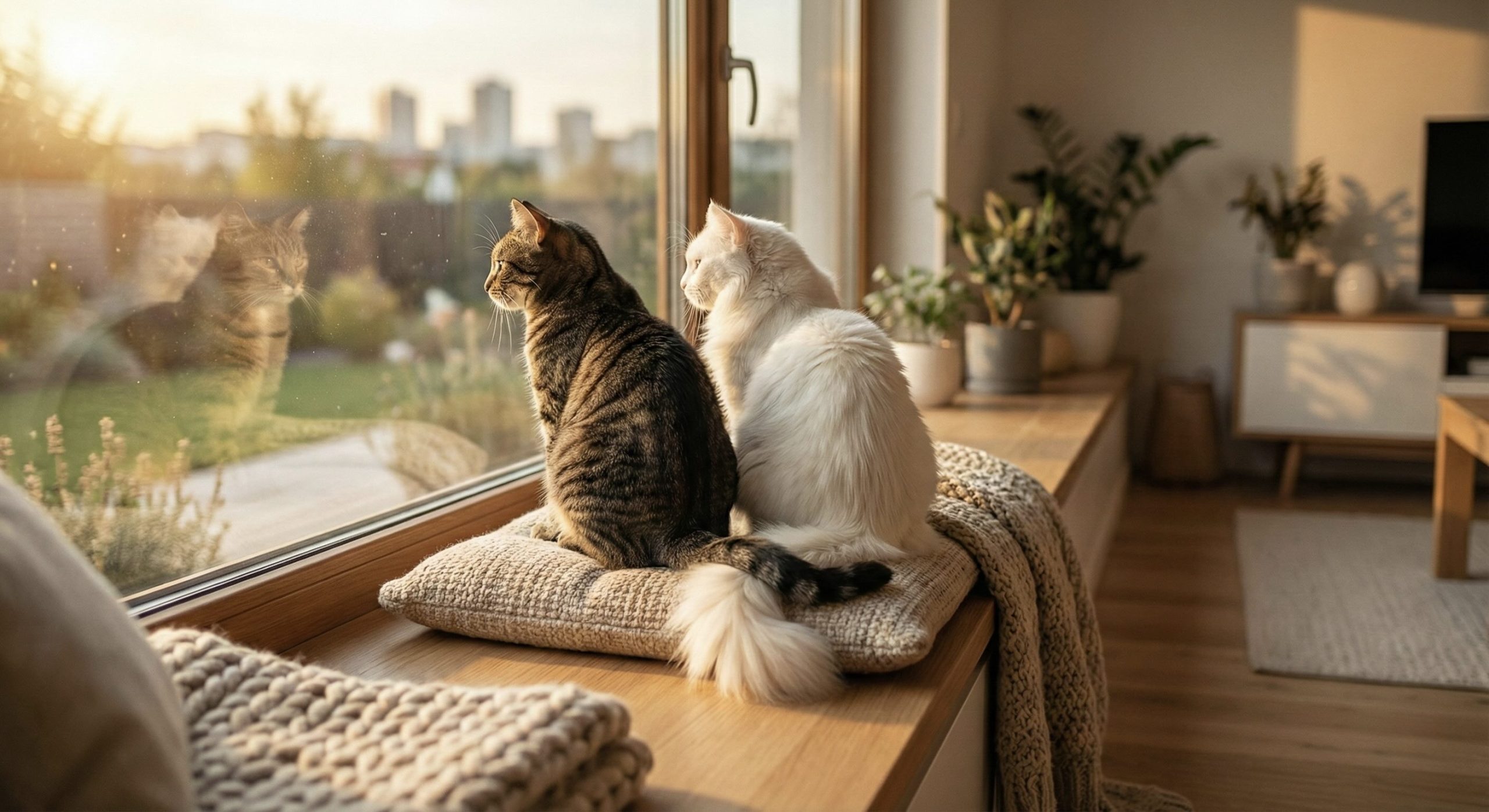
If your cat is pacing the hallway at 3am or shadowing you from room to room, you’re not alone. Restlessness is one of the most common behavioural complaints among cat owners. And while toys, puzzle feeders, and extra playtime can help, a surprising solution is gaining traction: adopting a second cat.
It sounds counterintuitive, but according to emerging research, a feline companion can reduce anxiety, increase stimulation, and even improve overall well-being.
Cats aren’t as solitary as we think
First things first: this theory is outdated. Domestic cats are far more socially flexible than their wild ancestors. In fact, many form strong bonds with both humans and other cats.
A 2022 systematic review published in the Journal of Feline Medicine and Surgery found that multi‑cat households are not more stressful; instead, well-being depends on compatibility, resources, and social structure.
The authors note that cats can “form affiliative relationships” and benefit from companionship when matched appropriately.
In other words: cats do enjoy company.
The effects of a second cat
Restlessness often stems from separation related problems (SRP), a condition more common in cats than previously recognised.
So where does a second cat come in?
According to veterinarian and animal behaviourist Dr. Paola Cuevas, adding a second cat can help reduce anxiety in some cases by providing “stimulation and companionship,” especially for cats distressed by long periods of solitude. Cuevas emphasises that this isn’t a universal fix, but it can be transformative for the right personality type.
Similarly, the Institute for Environmental Research and Education notes that a second cat can alleviate loneliness and boredom, though careful introductions and personality matching are essential to avoid worsening stress.
The benefits on humans
While the focus is on feline well-being, there’s a bonus: humans may benefit as well. A 2024 three‑country study on animal companionship found that pets add “an extra dimension to human well-being,” enriching daily life and emotional health.
Two cats interacting, playing, and resting together can create a calmer, more harmonious home environment – one that benefits everyone.
Signs your cat might want a companion
Not every restless cat is lonely, but certain behaviours can hint at social needs:
- Excessive vocalisation when you leave or return
- Following you constantly around the home
- Over grooming or under stimulation
- Destructive behaviour linked to boredom
- High sociability toward other cats
When a second cat isn’t the answer
Despite the potential benefits, experts stress that a second cat is not a universal solution.
A second cat may not be ideal if your current cat:
- Shows aggression toward other cats
- Guards resources (food, litter boxes, resting spots)
- Has a history of territorial behaviour
- Is elderly, ill, or highly anxious
In these cases, environmental enrichment may be the better path.
If you do adopt…
Experts agree on one thing: introductions must be slow, structured, and scent‑based.
Dr. Cuevas recommends a gradual process involving:
- Separate safe rooms
- Scent swapping
- Short, supervised visual contact
- Positive reinforcement
This careful approach increases the likelihood of forming the affiliative bonds described in the 2022 review.
Equally important is resource distribution. Behaviourists advise providing:
- One litter box per cat, plus one extra
- Multiple feeding stations
- Separate resting and hiding spots
- Vertical space for escape routes
These reduce competition and help both cats feel secure.
A second cat can be a powerful antidote to restlessness, but this isn’t a one‑size‑fits‑all solution. Understanding your cat’s personality, needs, and stress signals is essential before taking the leap.
If your restless cat seems lonely, curious about other cats, or distressed when left alone, a second cat might just be the unexpected remedy that brings peace back to your home.